Traditional PDE modeling, control, and optimization methods—rooted in analytical models and numerical solvers—have long provided rigorous guarantees but face challenges of strong modeling assumptions, scalability, and data integration. The rapid rise of artificial intelligence (AI) is transforming this landscape. Data-driven approaches are now able to identify governing PDEs directly from data, construct physics-informed reduced-order models, and design controllers and observers with tractable computation while preserving closed-loop guarantees. Together, they are transforming control of complex, physics-based systems.
This workshop will present the latest advances in AI for modeling, control, and optimization of PDEs, as well as PDEs arising in nonlinear control problems such as optimal control and delayed systems. The program features a series of invited talks by invited speakers from both academia and national laboratories spanning control theory, machine learning, and different application domains. Together, these talks will cover new algorithmic frameworks, theoretical developments, and application-driven studies—ranging from soft robotics and fluid mechanics to charged-particle beam control and delayed dynamical systems providing attendees with a state-of-the-art overview of the development in machine learning for PDEs.
List of Speakers
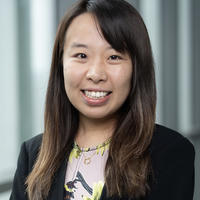
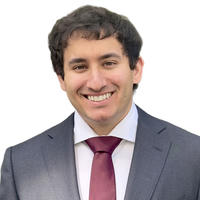
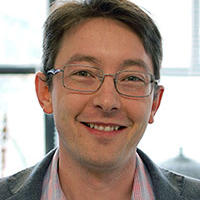
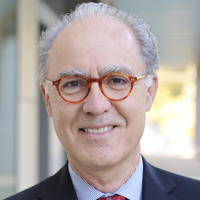
List of Organizers

Schedule
| Time | Speaker | Event |
|---|---|---|
| 8:30am - 8:45am | Organizers | Welcoming remarks |
| 8:45am - 9:30am | Miroslav Krstić | Neural Operators for PDEs That Stabilize PDEs |
| 9:30am - 10:15am | Thomas Beckers | Energy-based learning of PDEs with Uncertainty Quantification |
| 10:15am - 10:45am | Coffee break | Coffee break |
| 10:45am - 11:30am | Kyriakos Vamvoudakis | Trajectory-Informed versus Physics Informed Machine Learning |
| 11:30am - 12:15pm | Yuanyuan Shi | Neural Operators for Control of Nonlinear Delay Systems |
| 12:15pm - 1:30pm | Lunch Break | Lunch Break |
| 1:30pm - 2:15pm | Steve Brunton | Incorporating Physics into Machine Learning |
| 2:15pm - 3:00pm | Ján Drgoňa | Differentiable Predictive Control for PDEs |
| 3:00pm - 3:45pm | Alex Scheinker | Adaptive Generative Diffusion Models |
| 3:45pm - 4:15pm | Coffee break | Coffee break |
| 4:15pm - 4:45pm | Luke Bhan | Tutorial coding session |
| 4:45pm - 5:00pm | Organizers | Closing remarks |
Technical Program and Abstracts
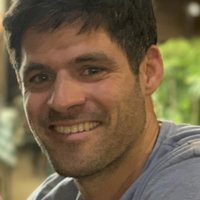
Adaptive Generative Diffusion Models
Alexander Scheinker · Los Alamos National Laboratory
2026-05-26 · 3:00 PM
SlidesAbstract
To be announced.
Biography
Alexander Scheinker is a Staff Researcher with Los Alamos National Laboratory, where he is the Adaptive Machine Learning Team Leader in the Applied Electrodynamics group. His research focuses on applying advanced control theory and machine learning methods to electrodynamics and for the stabilization and optimization of noisy and analytically unknown complex time-varying systems. Alexander received undergraduate degrees in mathematics and physics from Washington University in St. Louis, in 2006, and the M.S. degree in mathematics and the Ph.D. degree in control theory from the University of California, San Diego, in 2008 and 2012, respectively. He has been developing extremum-seeking (ES) algorithms, proving their stability properties, and applying them for noninvasive diagnostics and for the control of intensely charged particle beams in large particle accelerator facilities. His recent research focuses on combining ES with deep learning methods such as 3-D convolutional neural networks, to develop AI tools that are robust for time-varying systems with distribution shift. He has coauthored more than 20 journal papers on ES theory and applications and the book titled Model-Free Stabilization by Extremum Seeking.

Energy-based learning of PDEs with Uncertainty Quantification
Thomas Beckers · Vanderbilt University
2026-05-26 · 9:30 AM
SlidesAbstract
To be announced.
Biography
Thomas Beckers is an Assistant Professor of Computer Science and Mechanical Engineering at Vanderbilt University. Before joining Vanderbilt, he was a postdoctoral researcher at the Department of Electrical and Systems Engineering, University of Pennsylvania, where he was a member of the GRASP Lab, PRECISE Center and ASSET Center. In 2020, he earned his Ph.D. in Electrical Engineering at the Technical University of Munich (TUM), Germany. He received his B.Sc. and M.Sc. degree in Electrical Engineering in 2010 and 2013, respectively, from the Technical University of Braunschweig, Germany. In 2018, he was a visiting researcher at the University of California, Berkeley. He is a DAAD AInet fellow and was awarded with the Rhode & Schwarz Outstanding Dissertation Prize. His research interests include physics-enhanced learning, nonparametric models, and safe learning-based control. He organized several workshops on the intersection between machine learning and control, including topics such as physics-informed learning and Gaussian-process based control.
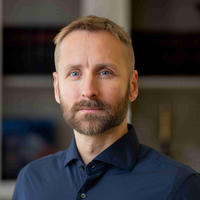
Differentiable Predictive Control for PDEs
Ján Drgoňa · Johns Hopkins University
2026-05-26 · 2:15 PM
SlidesAbstract
To be announced.
Biography
Ján Drgoňa is an associate professor in the Department of Civil and Systems Engineering and the Ralph S. O’Connor Sustainable Energy Institute (ROSEI) at Johns Hopkins University (JHU). Before joining JHU, Jan was a senior data scientist in the Physics and Computational Sciences Division at Pacific Northwest National Laboratory and a postdoc at the mechanical engineering department at KU Leuven in Belgium. Jan has a PhD in Control Engineering from the Slovak University of Technology in Bratislava, Slovakia. His current research is focused on scientific machine learning with applications in sustainable energy systems.
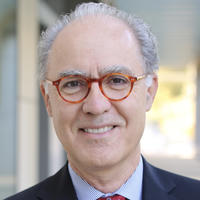
Neural Operators for PDEs That Stabilize PDEs
Miroslav Krstić · University of California, San Diego
2026-05-26 · 8:45 AM
SlidesAbstract
To be announced.
Biography
Miroslav Krstić is a Distinguished Professor of Mechanical and Aerospace Engineering, holds the Alspach endowed chair, and is the founding director of the Center for Control Systems and Dynamics at UC San Diego. He also serves as Senior Associate Vice Chancellor for Research at UCSD. As a graduate student, Krstic won the UC Santa Barbara best dissertation award and student best paper awards at CDC and ACC. Krstic has been elected Fellow of IEEE, IFAC, ASME, SIAM, AAAS, IET (UK), and AIAA (Assoc. Fellow) - and as a foreign member of the Serbian Academy of Sciences and Arts. He has received the IEEE Roger W. Brockett Control Systems Award, Richard E. Bellman Control Heritage Award, Bode Lecture Prize, SIAM Reid Prize, ASME Oldenburger Medal, Nyquist Lecture Prize, Paynter Outstanding Investigator Award, Ragazzini Education Award, IFAC Nonlinear Control Systems Award, IFAC Ruth Curtain Distributed Parameter Systems Award, IFAC Adaptive and Learning Systems Award, Chestnut textbook prize, AV Balakrishnan Award for the Mathematics of Systems, Control Systems Society Distinguished Member Award, the PECASE, NSF Career, and ONR Young Investigator awards, and the Schuck (’96 and ’19) and Axelby paper prizes.
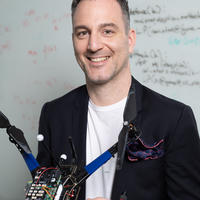
Trajectory-Informed versus Physics Informed Machine Learning
Kyriakos Vamvoudakis · Georgia Institute of Technology
2026-05-26 · 10:45 AM
SlidesAbstract
To be announced.
Biography
Kyriakos G. Vamvoudakis was born in Athens, Greece. He received the Diploma in Electronic and Computer Engineering from the Technical University of Crete, Greece in 2006, and the MSc and PhD degrees in Electrical Engineering at The University of Texas, Arlington in 2008 and 2011, respectively. During the period from 2012 to 2016 he was a project research scientist at the Center for Control, Dynamical Systems and Computation at the University of California, Santa Barbara. He was an Assistant Professor at the Kevin T. Crofton Department of Aerospace and Ocean Engineering at Virginia Tech until 2018. He currently serves as the Dutton-Ducoffe Endowed Professor at The Daniel Guggenheim School of Aerospace Engineering at Georgia Tech. He holds a secondary appointment in the School of Electrical and Computer Engineering. His expertise is in reinforcement learning, control theory, game theory, cyber-physical security, bounded rationality, and safe/assured autonomy. He has received numerous prestigious awards, including the 2019 ARO YIP Award, the 2018 NSF CAREER Award, the 2018 DoD Minerva Research Initiative Award, and the 2021 GT Chapter Sigma Xi Young Faculty Award. His work has also been recognized with several best paper nominations and international awards, such as the 2016 International Neural Network Society Young Investigator (INNS) Award. He is the Editor-in-Chief of Aerospace Science and Technology and currently serves on the IEEE Control Systems Society Conference Editorial Board. Additionally, he is an Associate Editor for several journals, including Automatica, IEEE Transactions on Automatic Control, IEEE Transactions on Neural Networks and Learning Systems, etc. He is a registered Professional Engineer (PE) in Electrical/Computer Engineering, a member of the Technical Chamber of Greece, and an Associate Fellow of AIAA.
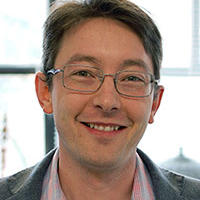
Incorporating Physics into Machine Learning
Steve Brunton · University of Washington
2026-05-26 · 1:30 PM
SlidesAbstract
To be announced.
Biography
Steven L. Brunton is a Professor of Mechanical Engineering at the University of Washington. He is also Adjunct Professor of Applied Mathematics and Computer science, and a Data Science Fellow at the eScience Institute. Steve received the B.S. in mathematics from Caltech in 2006 and the Ph.D. in mechanical and aerospace engineering from Princeton in 2012. His research combines machine learning with dynamical systems to model and control systems in fluid dynamics, biolocomotion, optics, energy systems, and manufacturing. He received the Army and Air Force Young Investigator Program (YIP) awards and the Presidential Early Career Award for Scientists and Engineers (PECASE). Steve is also passionate about teaching math to engineers as co-author of three textbooks and through his popular YouTube channel, under the moniker “eigensteve”.
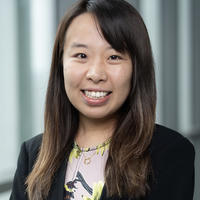
Neural Operators for Control of Nonlinear Delay Systems
Yuanyuan Shi · University of California, San Diego
2026-05-26 · 11:30 AM
SlidesAbstract
To be announced.
Biography
Yuanyuan Shi is an Assistant Professor of Electrical and Computer Engineering at UC San Diego. Her research interests are at the intersection of machine learning and control, with applications to power and energy systems. Before joining UCSD, she was a postdoctoral researcher at the Department of Computing and Mathematical Sciences at California Institute of Technology between 2020-2021. She obtained her Ph.D. in Electrical and Computer Engineering (2020), and masters in Statistics (2020) and Electrical and Computer Engineering (2019), all from the University of Washington, Seattle. She is a recipient of the inaugural Michael R. Anastasio LANL-UC Early Career Fellowship, NSF CAREER Award, Schmidt Sciences AI2050 Early Career Fellowship, Hellman Fellowship, and best paper finalists in L4DC 2025 and ACM e-Energy 2022.