Location: Churchill C2
Traditional PDE modeling, control, and optimization methods—rooted in analytical models and numerical solvers—have long provided rigorous guarantees but face challenges of strong modeling assumptions, scalability, and data integration. The rapid rise of artificial intelligence (AI) is transforming this landscape. Data-driven approaches are now able to identify governing PDEs directly from data, construct physics-informed reduced-order models, and design controllers and observers with tractable computation while preserving closed-loop guarantees. Together, they are transforming control of complex, physics-based systems.
This workshop will present the latest advances in AI for modeling, control, and optimization of PDEs, as well as PDEs arising in nonlinear control problems such as optimal control and delayed systems. The program features a series of invited talks by invited speakers from both academia and national laboratories spanning control theory, machine learning, and different application domains. Together, these talks will cover new algorithmic frameworks, theoretical developments, and application-driven studies—ranging from soft robotics and fluid mechanics to charged-particle beam control and delayed dynamical systems providing attendees with a state-of-the-art overview of the development in machine learning for PDEs.
List of Speakers
List of Organizers

Schedule
| Time | Speaker | Event |
|---|---|---|
| 9:00am - 9:15am | Organizers | Welcoming remarks |
| 9:15am - 10:00am | Miroslav Krstić | Adaptive and Neural Operator Control of Nonlinear Volterra Hyperbolic PDEs |
| 10:00am - 10:30am | Coffee break | Coffee break |
| 10:30am - 11:15am | Thomas Beckers | Energy-based learning of PDEs with Uncertainty Quantification |
| 11:15am - 12:00pm | Kyriakos Vamvoudakis | Trajectory-Informed versus Physics Informed Machine Learning |
| 12:00pm - 1:30pm | Lunch Break | Lunch Break |
| 1:30pm - 2:15pm | Luke Bhan | Neural Operators for Control of Nonlinear Delay Systems |
| 2:15pm - 3:00pm | Steve Brunton | Incorporating Physics into Machine Learning |
| 3:00pm - 3:30pm | Coffee break | Coffee break |
| 3:30pm - 4:15pm | Ján Drgoňa | Learning to Control PDEs with Differentiable Predictive Control and Neural Operators |
| 4:15pm - 5:00pm | Alex Scheinker | Adaptive Generative Diffusion Models for Charged Particle Beams Governed by Vlasov-Maxwell PDEs |
| 5:00pm - 5:15pm | Organizers | Closing remarks |
Technical Program and Abstracts
Adaptive Generative Diffusion Models for Charged Particle Beams Governed by Vlasov-Maxwell PDEs
Alexander Scheinker · Los Alamos National Laboratory
2026-05-26 · 4:15 PM
SlidesAbstract
Diffusion-based generative models are the state of the art for representing complex high-dimensional objects, from 3D protein structures to megapixel images to 6D phase-space densities of charged particle beams. For beams governed by the Vlasov-Maxwell equations, the full 6D phase-space distribution evolves under self-consistent nonlinear dynamics, while in practice only limited low-dimensional measurements — often a single 2D projection — are available. This talk explores how generative diffusion models can be combined with adaptive feedback to reconstruct and track such time-varying distributions from partial observations.
Biography
Alexander Scheinker is a Staff Researcher with Los Alamos National Laboratory, where he is the Adaptive Machine Learning Team Leader in the Applied Electrodynamics group. His research focuses on applying advanced control theory and machine learning methods to electrodynamics and for the stabilization and optimization of noisy and analytically unknown complex time-varying systems. Alexander received undergraduate degrees in mathematics and physics from Washington University in St. Louis, in 2006, and the M.S. degree in mathematics and the Ph.D. degree in control theory from the University of California, San Diego, in 2008 and 2012, respectively. He has been developing extremum-seeking (ES) algorithms, proving their stability properties, and applying them for noninvasive diagnostics and for the control of intensely charged particle beams in large particle accelerator facilities. His recent research focuses on combining ES with deep learning methods such as 3-D convolutional neural networks, to develop AI tools that are robust for time-varying systems with distribution shift. He has coauthored more than 20 journal papers on ES theory and applications and the book titled Model-Free Stabilization by Extremum Seeking.
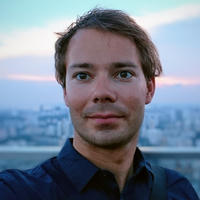
Energy-based learning of PDEs with Uncertainty Quantification
Thomas Beckers · Vanderbilt University
2026-05-26 · 10:30 AM
SlidesAbstract
Reliable models of dynamical systems are essential for safe control, optimization, and failure detection. However, deriving first-principles models for complex systems is often challenging and computationally expensive. While machine learning offers flexible alternatives, learned models frequently lack physical consistency and reliability, limiting their applicability in safety-critical settings.
In this talk, I will present our recent work on data-driven port-Hamiltonian systems (PHS) for physically consistent modeling and control of PDE systems. Our approach learns unknown Hamiltonians directly from data while preserving the underlying physical structure by design, enabling compositional modeling and uncertainty-aware predictions. I will demonstrate how these models can be used for safe control and, in particular, how generative models can be employed to rapidly solve the PDEs models inside the optimal control loop. This substantially accelerates the computation of optimal control inputs while maintaining robustness and physical consistency.
Biography
Thomas Beckers is an Assistant Professor of Computer Science and Mechanical Engineering at Vanderbilt University. Before joining Vanderbilt, he was a postdoctoral researcher at the Department of Electrical and Systems Engineering, University of Pennsylvania, where he was a member of the GRASP Lab, PRECISE Center and ASSET Center. In 2020, he earned his Ph.D. in Electrical Engineering at the Technical University of Munich (TUM), Germany. He received his B.Sc. and M.Sc. degree in Electrical Engineering in 2010 and 2013, respectively, from the Technical University of Braunschweig, Germany. In 2018, he was a visiting researcher at the University of California, Berkeley. He is a DAAD AInet fellow and was awarded with the Rhode & Schwarz Outstanding Dissertation Prize. His research interests include physics-enhanced learning, nonparametric models, and safe learning-based control. He organized several workshops on the intersection between machine learning and control, including topics such as physics-informed learning and Gaussian-process based control.
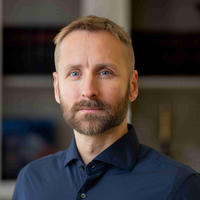
Learning to Control PDEs with Differentiable Predictive Control and Neural Operators
Ján Drgoňa · Johns Hopkins University
2026-05-26 · 3:30 PM
SlidesAbstract
Scientific machine learning is creating new opportunities for controlling systems governed by partial differential equations (PDEs). In this talk, we present a differentiable programming framework that combines Differentiable Predictive Control (DPC) with neural operators for end-to-end learning of feedback policies for PDE-constrained control. DPC reformulates parametric model predictive control as an offline gradient-based policy optimization problem, enabling policies to be optimized by backpropagating task objectives and constraint penalties through differentiable PDE solvers and surrogates [1]. To overcome the limitations of fixed-dimensional policy representations, we further cast PDE control as an operator learning problem that maps state fields to continuous control functions, enabling policies that naturally adapt to varying sensor, actuator, and multi-agent configurations [2]. Remarkably, policies trained on small agent populations exhibit cardinality invariance, enabling zero-shot transfer to significantly larger populations and robustness to partial agent failure. We empirically validate the framework on tracking, stabilization, and density transport across linear, nonlinear, chaotic, and turbulent PDE systems.
[1] Dibakar Roy Sarkar, Jan Drgoňa, Somdatta Goswami, Learning to Control PDEs with Differentiable Predictive Control and Time-Integrated Neural Operators, arXiv:2511.08992 2025
[2] Pietro Zanotta, Dibakar Roy Sarkar, Honghui Zheng, Somdatta Goswami, Jan Drgona, Cardinality-Invariant Neural Operator Policies for Scalable PDE Control, ICML, 2026
Biography
Ján Drgoňa is an Associate Professor in the Department of Civil and Systems Engineering with a secondary appointment in the Department of Electrical and Computer Engineering at Johns Hopkins University (JHU). Jan is a core faculty member of the Ralph S. O’Connor Sustainable Energy Institute (ROSEI) and an associate member of the Data Science and AI Institute (DSAI). Before joining JHU, Jan was a Senior Data Scientist in the Physics and Computational Sciences Division at the Pacific Northwest National Laboratory (PNNL), where he continues to hold a joint appointment. Jan previously worked as a postdoctoral researcher in the Mechanical Engineering Department at KU Leuven, Belgium, and received his PhD in Control Engineering from the Slovak University of Technology in Slovakia. His research focuses on scientific machine learning for modeling, optimization, and control of cyber-physical systems with applications to sustainable energy.
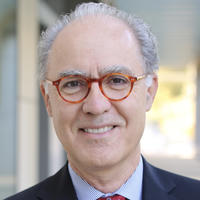
Adaptive and Neural Operator Control of Nonlinear Volterra Hyperbolic PDEs
Miroslav Krstić · University of California, San Diego
2026-05-26 · 9:15 AM
SlidesAbstract
Adaptive control learns the plant online; neural-operator control learns the controller offline. We bring the two together for a class of nonlinear hyperbolic PDEs whose dynamics are governed by an unknown Volterra series of arbitrarily many kernels. An observer-based passive identifier learns a truncation of this series online. The infinite-dimensional map that synthesizes the backstepping kernels from the parameter estimates — a cascade of PDEs on simplex domains of increasing dimension, prohibitive to solve in real time — is approximated once, offline, by a neural operator. The closed loop then carries two learning processes in series: online learning of the plant feeds an offline-learned PDE solver, whose output is the online-learned controller. We prove closed-loop stability and asymptotic regulation of the plant state, observer state, and input, on a basin that recovers the exact-kernel basin as the neural-operator accuracy improves.
Biography
Miroslav Krstić is a Distinguished Professor of Mechanical and Aerospace Engineering, holds the Alspach endowed chair, and is the founding director of the Center for Control Systems and Dynamics at UC San Diego. He also serves as Senior Associate Vice Chancellor for Research at UCSD. As a graduate student, Krstic won the UC Santa Barbara best dissertation award and student best paper awards at CDC and ACC. Krstic has been elected Fellow of IEEE, IFAC, ASME, SIAM, AAAS, IET (UK), and AIAA (Assoc. Fellow) - and as a foreign member of the Serbian Academy of Sciences and Arts. He has received the IEEE Roger W. Brockett Control Systems Award, Richard E. Bellman Control Heritage Award, Bode Lecture Prize, SIAM Reid Prize, ASME Oldenburger Medal, Nyquist Lecture Prize, Paynter Outstanding Investigator Award, Ragazzini Education Award, IFAC Nonlinear Control Systems Award, IFAC Ruth Curtain Distributed Parameter Systems Award, IFAC Adaptive and Learning Systems Award, Chestnut textbook prize, AV Balakrishnan Award for the Mathematics of Systems, Control Systems Society Distinguished Member Award, the PECASE, NSF Career, and ONR Young Investigator awards, and the Schuck (’96 and ’19) and Axelby paper prizes.
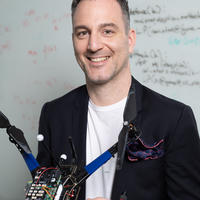
Trajectory-Informed versus Physics Informed Machine Learning
Kyriakos Vamvoudakis · Georgia Institute of Technology
2026-05-26 · 11:15 AM
SlidesAbstract
In this talk, we present a trajectory-informed machine learning framework for solving infinite-horizon optimal control problems in uncertain dynamical systems, and compare it with traditional physics-informed machine learning approaches. While physics-informed neural networks (PINNs) typically rely on pointwise enforcement of governing equations, the proposed methodology is formulated using system trajectories, enabling learning directly from observed dynamics and eliminating the need for explicit knowledge of the system’s drift term.
We further introduce a finite-horizon optimal control formulation that guarantees a unique solution to the associated Hamilton–Jacobi–Bellman (HJB) equation, overcoming key challenges faced by conventional PINN-based methods in infinite-horizon settings. A rigorous mathematical analysis is provided to show that the finite-horizon solution converges uniformly to the infinite-horizon HJB solution as the horizon becomes sufficiently large. The talk will conclude with numerical examples illustrating the robustness and effectiveness of the trajectory-informed framework for uncertain nonlinear control systems.
Biography
Kyriakos G. Vamvoudakis was born in Athens, Greece. He received the Diploma in Electronic and Computer Engineering from the Technical University of Crete, Greece in 2006, and the MSc and PhD degrees in Electrical Engineering at The University of Texas, Arlington in 2008 and 2011, respectively. During the period from 2012 to 2016 he was a project research scientist at the Center for Control, Dynamical Systems and Computation at the University of California, Santa Barbara. He was an Assistant Professor at the Kevin T. Crofton Department of Aerospace and Ocean Engineering at Virginia Tech until 2018. He currently serves as the Dutton-Ducoffe Endowed Professor at The Daniel Guggenheim School of Aerospace Engineering at Georgia Tech. He holds a secondary appointment in the School of Electrical and Computer Engineering. His expertise is in reinforcement learning, control theory, game theory, cyber-physical security, bounded rationality, and safe/assured autonomy. He has received numerous prestigious awards, including the 2019 ARO YIP Award, the 2018 NSF CAREER Award, the 2018 DoD Minerva Research Initiative Award, and the 2021 GT Chapter Sigma Xi Young Faculty Award. His work has also been recognized with several best paper nominations and international awards, such as the 2016 International Neural Network Society Young Investigator (INNS) Award. He is the Editor-in-Chief of Aerospace Science and Technology and currently serves on the IEEE Control Systems Society Conference Editorial Board. Additionally, he is an Associate Editor for several journals, including Automatica, IEEE Transactions on Automatic Control, IEEE Transactions on Neural Networks and Learning Systems, etc. He is a registered Professional Engineer (PE) in Electrical/Computer Engineering, a member of the Technical Chamber of Greece, and an Associate Fellow of AIAA.
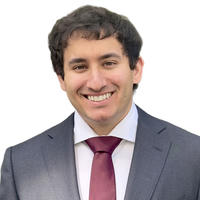
Neural Operators for Control of Nonlinear Delay Systems
Luke Bhan · University of California, San Diego
2026-05-26 · 1:30 PM
SlidesAbstract
Delays are unavoidable in modern autonomy and cyber-physical systems: computation, communication, sensing, and actuation all introduce latency that can destabilize otherwise well-designed controllers. Predictor feedback offers a powerful remedy by applying a nominal controller to a prediction of the future state, but in nonlinear systems these predictors are often implicit ODEs whose real-time solution becomes the bottleneck. This talk presents a neural-operator approach to predictor feedback: learn the infinite-dimensional prediction map offline, deploy it online as a fast surrogate, and retain rigorous closed-loop guarantees. I will show how this idea yields stability-certified approximate predictors for nonlinear delay systems, then extend the framework to unknown delays, time-varying input and measurement delays, and sampled state measurements. Across robotic and biological examples, the result is a blueprint for using machine learning inside control loops without giving up stability certificates.
Biography
Luke Bhan is a 4th year Ph.D. in the Department of Electrical and Computer Engineering at UC San Diego, working with Professors Yuanyuan Shi and Miroslav Krstic. His research is at the intersection of machine learning and control, with a focus on neural operators and learning-based control of partial differential equations. He completed an accelerated B.S./M.S. at Vanderbilt University in Computer Science and Physics & Astronomy before joining UCSD in 2022. He is a recipient of the Department of Energy Computational Science Graduate Fellowship, the UC San Diego ECE Ph.D. Fellowship, and the Underwood Memorial Award for outstanding graduating senior in physics at Vanderbilt. His work has been recognized with a Best Paper Finalist at L4DC 2025 and a Best Undergraduate Paper Award from Vanderbilt. He has also held research and engineering positions at Amazon, Lawrence Berkeley National Laboratory, MongoDB, and T-Mobile.
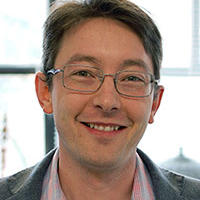
Incorporating Physics into Machine Learning
Steve Brunton · University of Washington
2026-05-26 · 2:15 PM
SlidesAbstract
This work will discuss several key challenges and opportunities in the use of machine learning for nonlinear system identification. In particular, I will describe how machine learning may be used to develop accurate and efficient nonlinear dynamical systems models for complex natural and engineered systems. I will emphasize the need for interpretable and generalizable data-driven models, such as the sparse identification of nonlinear dynamics (SINDy) algorithm, which identifies a minimal dynamical system model that balances model complexity with accuracy, avoiding overfitting. I will also introduce several key benchmark problems in dynamical systems and fluid dynamics that provide a diversity of metrics to assess modern system identification techniques. Because fluid dynamics is central to transportation, health, and defense systems, we will emphasize the importance of embedding known physics into machine learning algorithms.
Biography
Steven L. Brunton is a Professor of Mechanical Engineering at the University of Washington. He is also Adjunct Professor of Applied Mathematics and Computer science, and a Data Science Fellow at the eScience Institute. Steve received the B.S. in mathematics from Caltech in 2006 and the Ph.D. in mechanical and aerospace engineering from Princeton in 2012. His research combines machine learning with dynamical systems to model and control systems in fluid dynamics, biolocomotion, optics, energy systems, and manufacturing. He received the Army and Air Force Young Investigator Program (YIP) awards and the Presidential Early Career Award for Scientists and Engineers (PECASE). Steve is also passionate about teaching math to engineers as co-author of three textbooks and through his popular YouTube channel, under the moniker “eigensteve”.