Energy-based learning of PDEs with Uncertainty Quantification
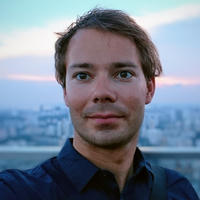
Thomas Beckers · Vanderbilt University
2026-05-26 · 10:30 AM
SlidesAbstract
Reliable models of dynamical systems are essential for safe control, optimization, and failure detection. However, deriving first-principles models for complex systems is often challenging and computationally expensive. While machine learning offers flexible alternatives, learned models frequently lack physical consistency and reliability, limiting their applicability in safety-critical settings.
In this talk, I will present our recent work on data-driven port-Hamiltonian systems (PHS) for physically consistent modeling and control of PDE systems. Our approach learns unknown Hamiltonians directly from data while preserving the underlying physical structure by design, enabling compositional modeling and uncertainty-aware predictions. I will demonstrate how these models can be used for safe control and, in particular, how generative models can be employed to rapidly solve the PDEs models inside the optimal control loop. This substantially accelerates the computation of optimal control inputs while maintaining robustness and physical consistency.
Biography
Thomas Beckers is an Assistant Professor of Computer Science and Mechanical Engineering at Vanderbilt University. Before joining Vanderbilt, he was a postdoctoral researcher at the Department of Electrical and Systems Engineering, University of Pennsylvania, where he was a member of the GRASP Lab, PRECISE Center and ASSET Center. In 2020, he earned his Ph.D. in Electrical Engineering at the Technical University of Munich (TUM), Germany. He received his B.Sc. and M.Sc. degree in Electrical Engineering in 2010 and 2013, respectively, from the Technical University of Braunschweig, Germany. In 2018, he was a visiting researcher at the University of California, Berkeley. He is a DAAD AInet fellow and was awarded with the Rhode & Schwarz Outstanding Dissertation Prize. His research interests include physics-enhanced learning, nonparametric models, and safe learning-based control. He organized several workshops on the intersection between machine learning and control, including topics such as physics-informed learning and Gaussian-process based control.