Trajectory-Informed versus Physics Informed Machine Learning
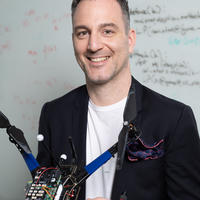
Kyriakos Vamvoudakis · Georgia Institute of Technology
2026-05-26 · 11:15 AM
SlidesAbstract
In this talk, we present a trajectory-informed machine learning framework for solving infinite-horizon optimal control problems in uncertain dynamical systems, and compare it with traditional physics-informed machine learning approaches. While physics-informed neural networks (PINNs) typically rely on pointwise enforcement of governing equations, the proposed methodology is formulated using system trajectories, enabling learning directly from observed dynamics and eliminating the need for explicit knowledge of the system’s drift term.
We further introduce a finite-horizon optimal control formulation that guarantees a unique solution to the associated Hamilton–Jacobi–Bellman (HJB) equation, overcoming key challenges faced by conventional PINN-based methods in infinite-horizon settings. A rigorous mathematical analysis is provided to show that the finite-horizon solution converges uniformly to the infinite-horizon HJB solution as the horizon becomes sufficiently large. The talk will conclude with numerical examples illustrating the robustness and effectiveness of the trajectory-informed framework for uncertain nonlinear control systems.
Biography
Kyriakos G. Vamvoudakis was born in Athens, Greece. He received the Diploma in Electronic and Computer Engineering from the Technical University of Crete, Greece in 2006, and the MSc and PhD degrees in Electrical Engineering at The University of Texas, Arlington in 2008 and 2011, respectively. During the period from 2012 to 2016 he was a project research scientist at the Center for Control, Dynamical Systems and Computation at the University of California, Santa Barbara. He was an Assistant Professor at the Kevin T. Crofton Department of Aerospace and Ocean Engineering at Virginia Tech until 2018. He currently serves as the Dutton-Ducoffe Endowed Professor at The Daniel Guggenheim School of Aerospace Engineering at Georgia Tech. He holds a secondary appointment in the School of Electrical and Computer Engineering. His expertise is in reinforcement learning, control theory, game theory, cyber-physical security, bounded rationality, and safe/assured autonomy. He has received numerous prestigious awards, including the 2019 ARO YIP Award, the 2018 NSF CAREER Award, the 2018 DoD Minerva Research Initiative Award, and the 2021 GT Chapter Sigma Xi Young Faculty Award. His work has also been recognized with several best paper nominations and international awards, such as the 2016 International Neural Network Society Young Investigator (INNS) Award. He is the Editor-in-Chief of Aerospace Science and Technology and currently serves on the IEEE Control Systems Society Conference Editorial Board. Additionally, he is an Associate Editor for several journals, including Automatica, IEEE Transactions on Automatic Control, IEEE Transactions on Neural Networks and Learning Systems, etc. He is a registered Professional Engineer (PE) in Electrical/Computer Engineering, a member of the Technical Chamber of Greece, and an Associate Fellow of AIAA.